
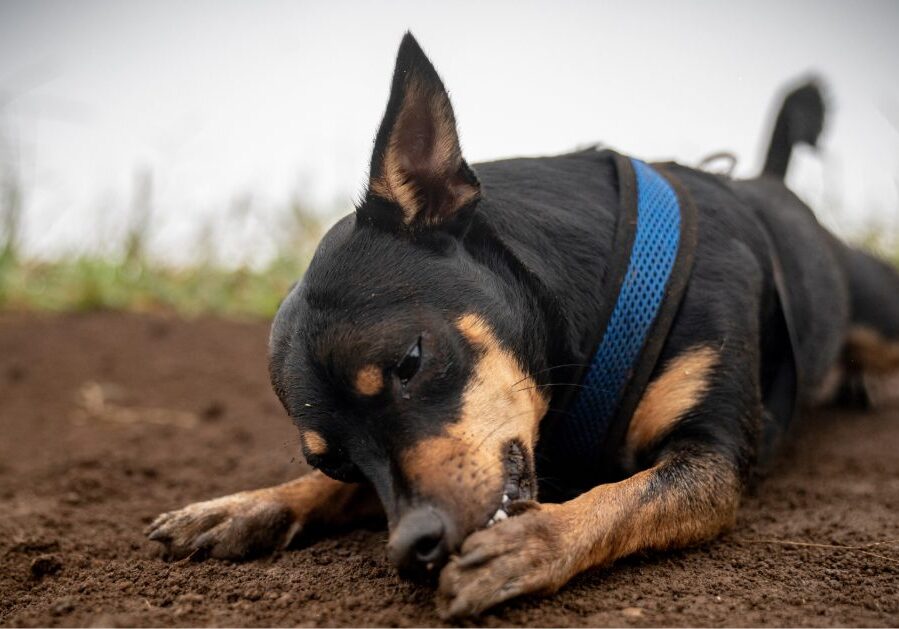
Dogs who are constantly licking and chewing their paws are almost always responding to itchiness, irritation, or discomfort somewhere on or between their toes, and the most common culprits are allergies, whether environmental or food-related. Paw licking might look like a harmless habit at first, but when it becomes constant or progresses to chewing, it usually signals something is bothering your dog enough that they’re trying to soothe it themselves. A dog licking paws is one of the most frequently reported behavioral concerns, underscoring just how common, and how solvable, this issue really is.
Because so many different conditions, from seasonal allergens to a hidden splinter, can trigger this same behavior, figuring out the root cause on your own can feel like a guessing game. Below, our team at Yorkville Animal Hospital explains the most common reasons for paw licking, how to tell environmental triggers apart from food sensitivities, and when it’s time to bring your dog in.
Could Environmental Allergies Be The Reason Your Dog Is Chewing Their Paws?
Environmental allergies are one of the leading reasons dogs lick and chew at their paws, especially during spring, summer, and fall in Toronto when pollen, grass, and mold spores are at their peak. Dogs absorb these allergens through their skin and paw pads as they walk through grass or sit outside, which is why their feet often become a primary target for irritation. This reaction, known as atopic dermatitis, tends to come with other clues beyond just paw licking. Dust mites and mold can also play a year-round role, which is why some dogs with environmental allergies still experience paw licking even in Toronto’s colder months, just to a lesser degree than during peak pollen season. Toronto’s ragweed season, which typically peaks from mid-August through October, is one of the more significant seasonal contributors to flare-ups in dogs with environmental sensitivities, alongside spring tree pollen and summer grass pollen.
Which Dog Breeds Are Most Prone to Environmental Allergies?
Certain breeds, including Golden Retrievers, Labradors, French Bulldogs, and West Highland White Terriers, tend to be more genetically predisposed to environmental allergies, and many of these same breeds show up disproportionately often in veterinary visits for chewing or licking related to seasonal triggers.
Other Signs of Environmental Allergies
- Red, inflamed skin between the toes
- Frequent ear infections or head shaking
- Watery eyes or sneezing
- Symptoms that worsen seasonally and ease in winter
If your dog’s paw licking seems to follow a seasonal pattern, environmental allergies are a strong possibility, and a veterinary exam can help confirm it while ruling out other causes.
How Does A Food Sensitivity Cause Itchy Canine Paws?
Food sensitivities work differently than environmental allergies, but they can produce the exact same paw licking behavior. When a dog’s immune system reacts to a specific protein in their diet, the resulting inflammation often shows up in the skin, including the paws, regardless of the season. Unlike environmental allergies, food-related paw licking tends to be a year-round issue rather than something that flares with pollen counts or humidity.
What Are the Signs of a Food-Related Paw Sensitivity?
- Paw licking that doesn’t improve with the seasons
- Digestive symptoms like soft stool or excessive gas
- Recurring skin infections in the same areas
- Symptoms that started after switching to a new food
Common allergenic proteins linked to itchy paws include beef, chicken, dairy, and wheat, though any ingredient a dog has eaten repeatedly over time can theoretically become a trigger. Some dogs with one food sensitivity also test positive for sensitivities to chemically similar proteins, a phenomenon called cross-reactivity, which is another reason a methodical, veterinarian-guided process tends to outperform random trial and error at home.
How Long Does an Elimination Diet Take to Work?
Distinguishing a food sensitivity from an environmental allergy usually requires a structured elimination diet supervised by your veterinarian, since over-the-counter food swaps rarely isolate the actual trigger. A proper elimination trial typically needs to run for a minimum of eight to twelve weeks before drawing any conclusions, since shorter trials often produce inconclusive results that lead pet owners back to square one. Patience during this process tends to pay off with a much clearer answer.
What Are The Best At-Home Soothing Soaks For Itchy Paws?
Many pet owners ask about soothing soaks when their dog’s paw licking becomes noticeable, and it’s a fair question, since a calm, comfortable paw is the immediate goal. The truth is that what works well for one dog’s itchy paws can aggravate another’s, depending on whether the underlying cause is allergies, a yeast or bacterial overgrowth, a contact irritant, or something else entirely. Soaks that are too frequent, use the wrong ingredients, or aren’t followed by proper drying can sometimes do more harm than good, particularly for dogs prone to interdigital yeast infections.
Even something as simple as the soap used to wash your floors or a new lawn treatment can act as a contact irritant, adding yet another variable to consider before reaching for a soak. Generic advice found online rarely accounts for an individual dog’s specific skin chemistry, breed-related skin folds, or pre-existing conditions like allergies, all of which can change how a particular ingredient interacts with already-irritated skin.
Why a Vet-Guided Approach Works Better Than Guesswork
This is exactly the kind of decision that benefits from a quick conversation with your veterinary team rather than guesswork. At Yorkville Animal Hospital, we can recommend an approach that’s actually suited to what’s driving your dog’s specific paw licking, rather than a generic solution that may not address the real issue.
When Does Paw Licking Warrant An Immediate Trip To The Vet?
Occasional paw licking after a walk is normal, but certain signs suggest it’s time to schedule an appointment rather than wait it out.
Warning Signs That Mean It’s Time to Schedule a Visit
- Licking or chewing that’s constant, not occasional
- Visible swelling, redness, or open sores between the toes
- A strong odor coming from the paws
- Limping or noticeable discomfort while walking
- Hair loss or discoloration on the fur from excessive licking
- Behavioral signs like increased anxiety or reduced interest in walks
Why Acting Early Makes Treatment Easier
Sometimes the behavior itself, rather than any visible skin change, is the clearest signal that something is bothering your dog enough to need professional attention. Paw licking that seems to come out of nowhere after exposure to a new environment, like a groomer, park, or boarding facility, is also worth mentioning to your veterinarian. Left unaddressed, persistent paw licking can lead to secondary skin infections that are more uncomfortable and more involved to resolve than the original irritation. Catching the underlying cause early tends to make treatment simpler and shorter.
Helping Your Dog Find Relief From Paw Licking In Toronto
Constant paw licking is your dog’s way of telling you something isn’t right, even if the cause isn’t obvious from the outside. Whether the trigger turns out to be seasonal allergies, a food sensitivity, or something else, a veterinary exam is the most reliable way to get a clear answer instead of cycling through guesses. If this has become a daily habit for your dog, our team at Yorkville Animal Hospital is ready to help you get to the bottom of it. Call us at (416) 923-8896 so we can identify what’s behind the behavior now and prevent weeks of frustration and discomfort for your dog down the line.
Recent Posts
About Us
At Yorkville Animal Hospital in Toronto, Ontario, we provide personalized veterinary care built around continuity, longer appointments, and a clear understanding of each pet’s history. We take time to explain findings, track health changes, and create care plans that fit each pet’s needs and lifestyle.