

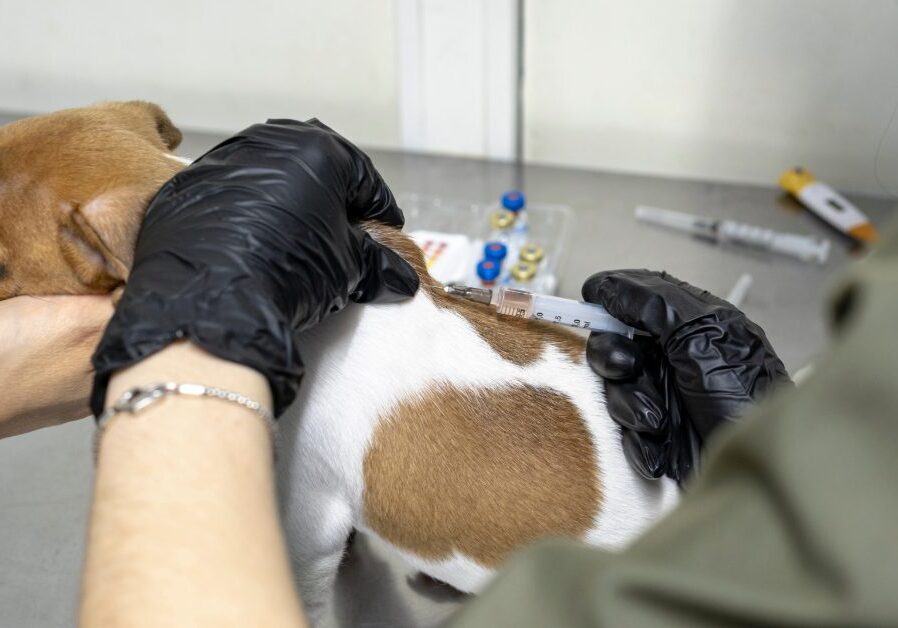
A puppy needs a series of core vaccines, including distemper, parvovirus, adenovirus, and rabies, delivered in multiple rounds between roughly 6 and 16 weeks of age, with additional non-core vaccines added based on lifestyle and regional risk in their first year. Puppy vaccines aren’t a single appointment and done, they’re a carefully timed schedule designed to work around a puppy’s developing immune system, and missing or delaying doses can leave real gaps in protection. New puppy owners often feel overwhelmed by how many vet visits the first year seems to require, but each one serves a specific purpose.
According to most veterinary guidelines, a typical puppy will need between three and four separate veterinary visits within their first four months of life just to complete their initial vaccine series, not counting wellness exams or other preventive care. This blog breaks down exactly which puppy vaccines are considered essential, why the booster schedule looks the way it does, which additional vaccines might apply to your puppy’s specific lifestyle, and why your puppy’s first year calls for some patience before diving into the dog park.
Which Core Vaccines Offer Non-Negotiable Protection For Puppies?
Core puppy vaccines are considered essential for every dog, regardless of breed, lifestyle, or location, because they protect against diseases that are highly contagious, often fatal, or both.
The Core Vaccines Every Puppy Needs
- Canine distemper virus
- Canine parvovirus
- Canine adenovirus (hepatitis)
- Canine parainfluenza
- Rabies
What Each Core Vaccine Protects Against
- Distemper: a virus affecting the respiratory, gastrointestinal, and nervous systems
- Parvovirus: a highly contagious intestinal virus that spreads through contaminated feces
- Adenovirus: a virus causing infectious canine hepatitis
- Parainfluenza: a highly contagious respiratory virus and one of the most common causes of kennel cough
- Rabies: a fatal viral disease transmissible to humans
These puppy vaccines form the foundation of nearly every veterinary vaccination schedule across North America. Most veterinarians administer the first three as a combination shot, often called a DHPP or DA2PP vaccine, which simplifies the schedule while still covering each individual disease. Parvovirus, in particular, is one of the most common reasons unvaccinated puppies end up hospitalized, since the virus spreads easily and can be fatal without aggressive treatment. Rabies vaccination is also legally required in Ontario, with most jurisdictions mandating the first dose around 12 to 16 weeks of age.
Why Do Young Puppies Require So Many Booster Shots Early On?
Puppies receive multiple rounds of the same core vaccines, typically every three to four weeks starting around six to eight weeks of age, because of something called maternal antibody interference. Puppies are born with some immunity passed down through their mother’s milk, but those maternal antibodies can also block a vaccine from working properly if given too early.
A Typical First-Year Puppy Vaccine Schedule
- 6 to 8 weeks: first round of core vaccines
- 10 to 12 weeks: second round
- 14 to 16 weeks: third round, plus rabies
- 1 year: booster round to lock in long-term immunity
Because no one can predict exactly when an individual puppy’s maternal antibodies will fade, veterinarians schedule a series of puppy vaccines rather than a single dose, ensuring there’s no unprotected gap once that maternal immunity wears off. Skipping or significantly delaying a scheduled booster can force the entire series to restart in some cases, since veterinarians can no longer be confident immunity built correctly without the proper interval between doses.
Why The Booster Schedule Can’t Be Condensed
Because boosters need to be spaced appropriately, condensing the schedule isn’t an option, even though many new puppy owners wish there were a faster path. Veterinarians sometimes hear frustration about the number of appointments required, but each properly timed dose meaningfully reduces the odds of a gap in protection.
Does Your Puppy Actually Need Non-Core Vaccines Like Bordetella?
Non-core vaccines aren’t recommended for every puppy, but they can be important depending on lifestyle, geographic location, and exposure risk. Your veterinarian will typically ask about your puppy’s planned routine, like daycare, boarding, or hiking, to determine which non-core vaccines make sense.
Which Non-Core Vaccines Are Commonly Recommended?
- Bordetella (kennel cough), often required for daycare, boarding, or grooming facilities
- Leptospirosis, recommended for puppies with exposure to wildlife or standing water. Some
veterinary organizations are now suggesting that Leptospirosis should be considered a core
vaccine, so consult with your veterinarian.
In and around Toronto, exposure to wildlife, ticks, and other dogs at parks or daycare often makes several of these non-core puppy vaccines a reasonable addition, and your veterinarian can help you weigh which ones fit your specific routine. Your veterinarian will typically consider factors like whether your puppy will spend time at a dog park, attend daycare, travel outside the city, or live in a household with a pre-existing medical condition before recommending any non-core additions to their puppy vaccine schedule. Unlike core puppy vaccines, non-core options are reassessed annually based on any changes to your dog’s lifestyle, so a puppy who didn’t need Bordetella early on might still receive it later if their routine changes.
Why Is It Dangerous To Socialize Your Puppy Before They Are Fully Vaccinated?
Socialization is critical for a puppy’s behavioral development, but exposing an under-vaccinated puppy to unfamiliar dogs, parks, or pet stores carries real risk before their immune system is ready. Parvovirus and distemper can both survive in the environment for extended periods, meaning a puppy can contract either disease from contaminated soil or surfaces without ever directly interacting with a sick animal.
How to Socialize Your Puppy Safely During This Window
The behavioral window for socialization, generally considered to run through about 14 weeks of age, unfortunately overlaps almost entirely with the period when a puppy is still building protection from their vaccines. This is part of why veterinarians emphasize controlled, lower-risk socialization rather than telling new owners to wait entirely, since missing this developmental window can create its own long-term behavioral challenges.
Most veterinarians recommend a balanced approach: socializing with known, healthy, fully vaccinated dogs and people in controlled settings while avoiding dog parks, pet stores, and high-traffic public areas until your puppy has completed their core vaccine series. Puppy classes held in clean, controlled indoor environments are often a safer middle ground than unrestricted outdoor socialization during this window. Look for puppy classes that require proof of at least the first round of vaccines from every participant and that disinfect their space between sessions, since these precautions meaningfully lower the exposure risk while your puppy is still building immunity.
Building A Vaccine Plan That Fits Your Puppy’s First Year
Every puppy’s vaccine schedule should be tailored to their breed, environment, and lifestyle, which is why a personalized plan from your veterinarian matters more than a generic checklist found online. If you’ve recently brought home a new puppy, schedule that first appointment with Yorkville Animal Hospital early to give your puppy the best possible start. Call us at (416) 923-8896 so we can give you a clear roadmap for exactly which puppy vaccines are coming up and when. Bringing your puppy’s vaccine record to every visit, including any doses given by a previous veterinarian or shelter, helps our veterinary team avoid unnecessary repeat doses and keep the schedule on track.
Recent Posts
About Us
At Yorkville Animal Hospital in Toronto, Ontario, we provide personalized veterinary care built around continuity, longer appointments, and a clear understanding of each pet’s history. We take time to explain findings, track health changes, and create care plans that fit each pet’s needs and lifestyle.