

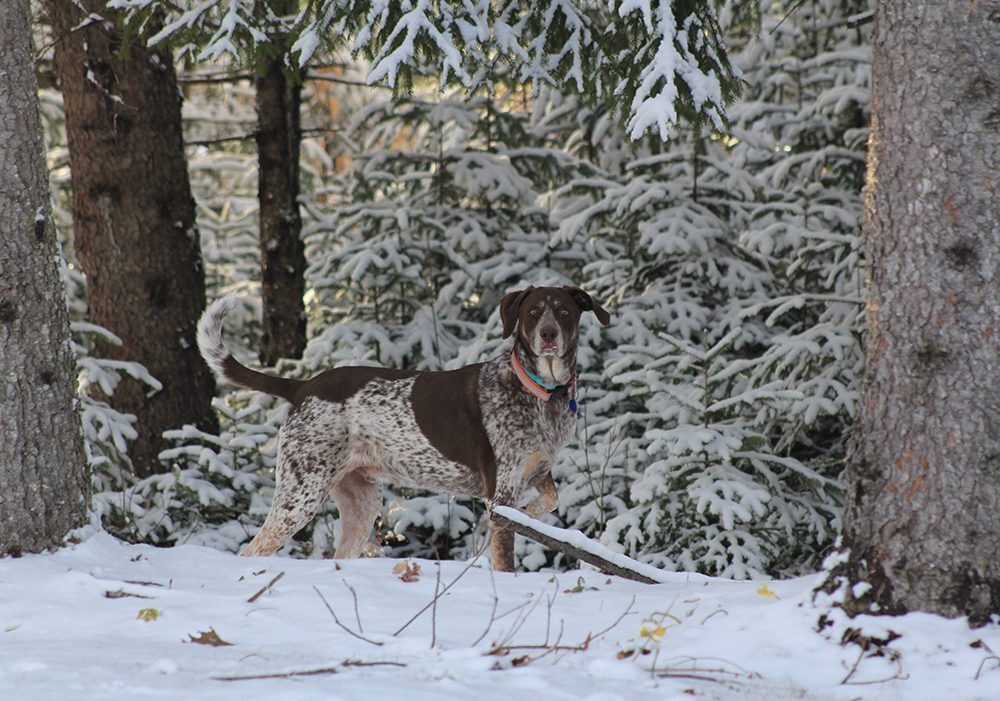
Yes, dogs can get ticks in the winter. Blacklegged ticks, the species that spreads Lyme disease in Ontario, become active whenever temperatures climb above about 4°C, and Toronto sees plenty of those days between November and March. Many people picture ticks as a summer problem that vanishes with the first snowfall. In reality, adult blacklegged ticks are most active in late fall and early spring, and they don’t die off in the cold. They tuck themselves under leaf litter and snow cover, then wake up and look for a host the moment the weather softens. That means ticks on dogs remain a real possibility during a January thaw walk through High Park or the Don Valley trails. At Yorkville Animal Hospital, we see tick-related concerns well outside the summer months. Here’s what Toronto dog owners should know about cold-weather ticks, the illnesses they carry, and how to protect your pup through every season.
How Do Ticks Survive a Toronto Winter?
Ticks have adapted to Canadian winters far better than most people realize.
Built for the Cold
Rather than dying when temperatures drop, blacklegged ticks slow down and shelter in insulated spots. Leaf piles, tall grass, brush, and the soil beneath a blanket of snow all hold surprisingly steady temperatures. Snow cover actually works like insulation, protecting ticks from the deepest cold. When a mild afternoon arrives, adult ticks climb onto low vegetation and wait for a passing animal to brush against them. This behaviour, called questing, can start within hours of a warm-up.
Where Winter Ticks Are Most Likely to Turn Up
Finding ticks on dogs in winter usually traces back to a few common settings:
- Wooded ravines and trail systems such as the Rouge Valley, Humber River, and Don Valley
- Off-leash areas bordered by brush, tall grass, or forest edges
- Backyards with leaf piles, woodpiles, or overgrown garden beds
- Cottages and rural properties visited over holiday weekends
Wildlife also plays a role. Deer, raccoons, coyotes, and mice carry ticks year-round, so any space these animals share with your dog can hold active ticks after a thaw. Public Health Ontario continues to expand its list of estimated Lyme disease risk areas across the province, including parts of the Toronto region. As tick populations spread, the window for exposure keeps growing longer.
Why Winter Ticks Are Harder to Spot
Ticks on dogs can be tougher to notice in winter than in summer. Thick winter coats, sweaters, and boots hide small parasites, and owners tend to skip post-walk checks when the ground is covered in snow. An unfed adult blacklegged tick is about the size of a sesame seed, so it can easily stay hidden in dense fur long enough to feed and transmit infection. Dogs with dark or heavy double coats, such as Bernese Mountain Dogs or Huskies, can be especially tricky to inspect.
Which Winter Tick-Borne Illnesses Should Dog Owners Watch For?
Several serious diseases can travel with a single tick bite, and cold weather doesn’t make them any less dangerous.
Lyme Disease
Lyme disease, caused by the bacterium Borrelia burgdorferi, is the illness most closely linked to ticks on dogs in Ontario. Blacklegged ticks transmit it after staying attached for roughly 24 to 48 hours. Many infected dogs never show symptoms, but some develop joint inflammation, fever, and in rare cases, a serious form of kidney disease. Because adult blacklegged ticks are most active from October through early spring, cooler months carry a meaningful share of the yearly risk.
Anaplasmosis and Other Infections
The same blacklegged tick can also spread anaplasmosis, a bacterial infection that affects blood cells and can cause fever, lethargy, and joint pain. A single tick may carry more than one disease at once, so a dog can pick up multiple infections from one bite. Other tick-borne illnesses, including ehrlichiosis and babesiosis, are less common in Ontario but appear more often in dogs that travel or have been adopted from other regions.
Should Your Dog Stay on Tick Preventatives in December and January?
Most veterinarians in southern Ontario now recommend year-round tick protection, including through the coldest months.
Why Seasonal Gaps Leave Dogs Exposed
Older advice suggested stopping tick medication once the leaves fell, on the theory that ticks on dogs were only a warm-weather problem. That approach made more sense when winters stayed reliably frozen. Today, Toronto’s freeze-thaw cycles bring frequent stretches of mild weather in December, January, and February. Each of those warm spells gives ticks a chance to latch on. Since Lyme disease transmission requires a tick to stay attached for a day or more, an effective preventative that kills ticks quickly offers an important safety net. Stopping in the fall removes that protection right when adult blacklegged ticks are among the most active.
Choosing a Product That Fits Your Routine
At Yorkville Animal Hospital, we use a monthly tablet for tick prevention all year, and the product changes with the season:
- June through November (heartworm season): a single monthly tablet that protects against heartworm, ticks, and fleas
- December through May: a monthly tablet that protects against fleas and ticks
Because both options are monthly tablets, there’s no need to juggle separate products or remember extra doses. Always use products recommended by your veterinarian, since some over-the-counter options are less effective and certain ingredients can be dangerous for cats in the same home.
Daily Checks Still Matter
Even with good protection, checking for ticks on dogs after outdoor time remains a smart habit, since preventatives work by killing ticks after they bite rather than stopping them from climbing aboard. Run your hands over your dog’s coat, paying close attention to the ears, neck, armpits, between the toes, and under the tail. If you find an attached tick, contact your veterinary team for guidance on safe removal and whether testing makes sense.
What Are the Early Warning Signs of a Winter Tick-Borne Disease?
Symptoms of tick-borne illness can be subtle and often appear weeks or months after the bite.
Delayed Symptoms Can Be Easy to Miss
Signs of Lyme disease in dogs typically develop two to five months after infection. By then, many owners have forgotten the tick or never noticed it in the first place. A dog bitten during a December thaw might not show changes until spring. Anaplasmosis tends to appear sooner, often within one to two weeks. Because these timelines vary, watching for changes in your dog’s behaviour matters more than remembering a specific bite. If you’ve found ticks on dogs in your household this season, mention it at your next appointment, even if everyone seems healthy.
Symptoms That Warrant a Call to Your Vet
Reach out to your veterinarian if you notice any of the following:
- Lameness that comes and goes or shifts from one leg to another
- Stiffness, reluctance to walk, or a hunched posture
- Fever, lethargy, or a sudden drop in energy
- Loss of appetite
- Swollen lymph nodes
- Increased thirst or urination
Many of these signs overlap with other conditions, including arthritis and injuries, so a veterinary exam and bloodwork are the best way to find the cause. Early diagnosis gives your dog the best chance at a smooth recovery, and your veterinarian will recommend the right treatment based on test results.
Year-Round Tick Protection With Yorkville Animal Hospital
Ticks don’t take the winter off, and neither should your dog’s protection. Mild days, sheltered habitats, and growing tick populations across southern Ontario mean ticks on dogs can show up in any month of the year, and preventing ticks on dogs is far easier than managing the illnesses they leave behind. Consistent preventatives and regular tick checks after outdoor adventures work together to lower your dog’s risk of Lyme disease, anaplasmosis, and other infections. The team at Yorkville Animal Hospital can help you choose a tick preventative that suits your dog’s lifestyle, and review whether the Lyme vaccine makes sense for your pet during your next visit. Whether your dog spends winter weekends hiking ravine trails or mostly sticks to city sidewalks, we’ll build a plan that fits. Call Yorkville Animal Hospital at (416) 923-8896 to book an appointment and give your dog reliable protection through every season.
Recent Posts
About Us
At Yorkville Animal Hospital in Toronto, Ontario, we provide personalized veterinary care built around continuity, longer appointments, and a clear understanding of each pet’s history. We take time to explain findings, track health changes, and create care plans that fit each pet’s needs and lifestyle.