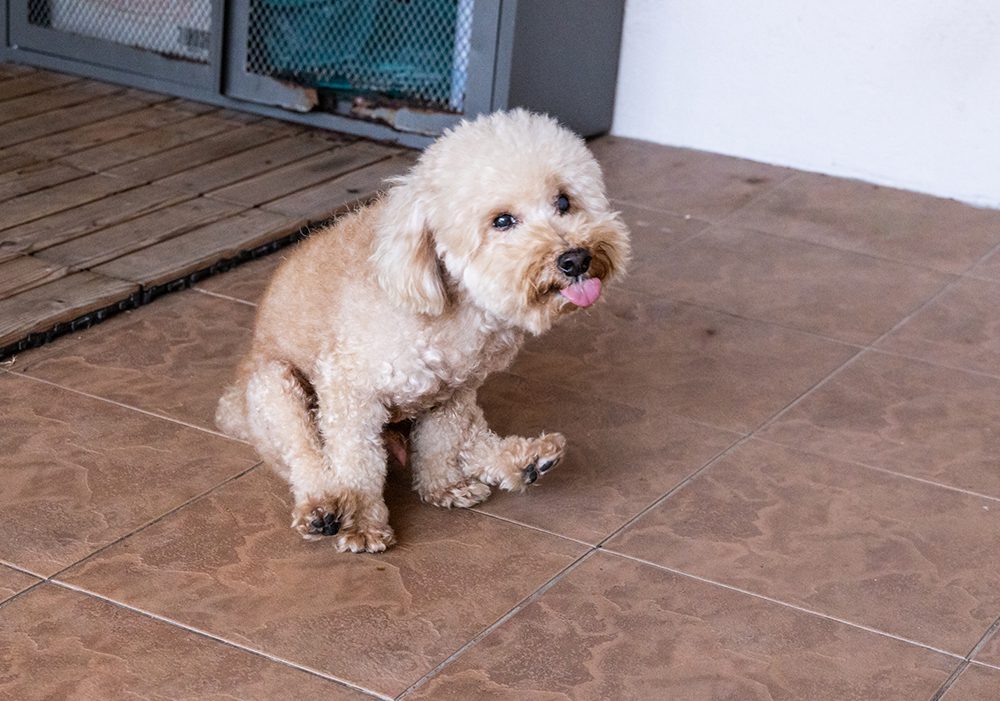
Dog scooting usually means your dog feels itching, irritation, or pressure around the rear end, and full or impacted anal glands are the most common cause. Intestinal parasites, allergies, and skin infections can also trigger the behaviour. While a dog dragging its bottom across the living room rug might look funny, it’s your pet’s way of trying to relieve discomfort they can’t reach. An occasional scoot after a bowel movement may not mean much, but frequent or ongoing dog scooting deserves attention. The good news is that most causes respond well to veterinary care once the source is identified. At Yorkville Animal Hospital, we help Toronto dog owners get to the bottom of this common complaint every week. Below, we explain how anal glands work, how parasites play a role, how dietary fibre may help, and what can happen when scooting goes unaddressed.
What Are Anal Glands, and How Can You Tell If They’re Full or Impacted?
Anal glands are behind the majority of dog scooting cases, so understanding them helps explain the behaviour.
What Anal Glands Do
Dogs have two small sacs, called anal glands or anal sacs, located just inside the anus at roughly the four and eight o’clock positions. They hold a strong-smelling, oily fluid that works as a scent marker. Normally, firm stool presses against the glands during a bowel movement and empties them naturally. When that process works, most dogs never need help, and dog scooting rarely becomes a problem. That’s why dogs sniff each other’s rear ends when they meet; they’re reading a chemical calling card.
Why the Glands Don’t Always Empty
Soft stool, chronic diarrhea, obesity, allergies, and narrow gland ducts can all prevent proper emptying. Small breeds such as Chihuahuas, Shih Tzus, and Cavalier King Charles Spaniels tend to have more trouble, though any dog can develop gland issues. When fluid builds up, it thickens and creates pressure that feels uncomfortable or painful.
Signs Behind Dog Scooting That Point to the Anal Glands
Along with dog scooting, watch for:
- Persistent licking or chewing at the tail base or rear end
- A strong, fishy odour that lingers on your dog or furniture
- Swelling or redness on one or both sides of the anus
- Straining, discomfort, or crying out while passing stool
- Reluctance to sit down or sudden turning to look at the hind end
Your veterinarian can check the glands during a quick exam and express them safely if needed. Attempting this at home without training can cause injury or push infection deeper into the tissue.
Can Tapeworms and Other Intestinal Parasites Cause Dog Scooting?
Yes, intestinal parasites can cause dog scooting, although they’re less common culprits than anal glands.
How Tapeworms Lead to Dog Scooting
Tapeworm segments break off inside the intestine and pass out through the anus. These small, flat segments look like grains of rice or sesame seeds and can still move when they first emerge. As they crawl around the area, they irritate the skin and prompt your dog to drag their bottom for relief. You might spot segments in your dog’s stool, stuck to the fur under the tail, or on their bedding.
Where Tapeworms Come From
Dogs typically pick up the most common tapeworm by swallowing an infected flea while grooming. Hunting or scavenging rodents and rabbits can lead to other tapeworm species. Because fleas play such a large role, flea prevention also helps protect against tapeworms. Roundworms, hookworms, and whipworms occasionally cause anal irritation too, especially when they trigger diarrhea.
Other Causes of Dog Scooting to Rule Out
Parasites and anal glands aren’t the only explanations. Your veterinarian may also look for:
- Food or environmental allergies, which often cause itchy skin around the rear, paws, and ears
- Bacterial or yeast skin infections
- Stool or matted fur stuck around the anus, common in long-haired breeds
- Growths, tumours, or other changes around the anus
A stool sample and physical exam usually help narrow down which of these is behind your dog scooting. Bringing a fresh sample to your appointment speeds up the process.
How Can Dietary Fibre Help Prevent Anal Gland Problems?
Diet affects stool quality, and stool quality has a direct effect on how well anal glands empty, which makes nutrition an important part of reducing dog scooting.
Why Fibre Matters
Fibre adds bulk to stool and helps it hold its shape. Firmer, well-formed stool puts gentle pressure on the anal glands as it passes, helping them empty on their own. Dogs with frequently soft stool or diets low in fibre often have more trouble with recurring anal gland issues.
Fibre Sources Your Veterinarian May Discuss
Every dog’s digestive system responds differently, and adding fibre too quickly can cause gas, bloating, or loose stool. Talk to your veterinarian before changing your dog’s diet. Depending on your dog’s needs, the conversation may include:
- Plain canned pumpkin with no added sugar or spices
- Veterinary-formulated high-fibre therapeutic diets
- Psyllium-based fibre supplements made for pets
- Certain dog-safe vegetables, such as green beans
Weight and Hydration Play a Role Too
Extra body fat around the hind end can reduce the natural pressure that helps empty the glands. Helping your dog reach a healthy weight, along with steady access to fresh water, supports better digestion and stool quality. Your veterinary team can recommend a nutrition and weight plan tailored to your dog, which can reduce dog scooting over the long term.
Why Fibre Isn’t a Cure-All
Fibre helps many dogs, but it won’t fix every case of dog scooting. If allergies, parasites, or an infection are driving the itch, extra fibre alone won’t solve the problem, and a delay in the right diagnosis can let the underlying issue worsen. Some dogs also need their glands checked on a regular schedule even with an ideal diet. Your veterinarian can explain whether nutrition changes make sense for your dog or whether another approach will work better.
What Happens If You Ignore Dog Scooting That Won’t Stop?
Ongoing dog scooting signals a problem that rarely resolves on its own, and waiting can lead to complications.
Abscesses and Ruptured Glands
When dog scooting stems from anal glands that stay impacted, bacteria can multiply inside the sacs and cause an infection. Without treatment, an infected gland can form a painful abscess that may eventually rupture through the skin. A ruptured gland leaves an open, draining wound beside the anus, which usually requires antibiotics, pain control, and sometimes sedation for cleaning. Repeated infections can lead to scarring and chronic gland problems, and some dogs eventually need surgery to remove the glands.
Missing a More Serious Diagnosis
Persistent scooting can also hide conditions that benefit from early detection. Anal sac tumours, though uncommon, sometimes show up first as swelling or scooting. Ongoing allergies can worsen into widespread skin infections, and untreated parasites can spread to other pets in the household. Regular exams give your veterinarian a chance to catch these issues while they’re easier to manage.
Your Dog’s Comfort and Your Home
Constant itching and pressure make dogs restless and irritable. Frequent scooting also spreads bacteria and anal gland fluid onto carpets, rugs, and furniture. Addressing the cause quickly helps your dog feel better and spares your floors. If dog scooting continues for more than a day or two, or you notice swelling, bleeding, or a bad smell, book a visit rather than waiting it out.
Find Relief for Your Scooting Dog at Yorkville Animal Hospital
Dog scooting is your pet’s way of saying something feels wrong back there. Full or impacted anal glands top the list of causes, but tapeworms, allergies, skin infections, and other conditions can produce the same behaviour. A veterinary exam pinpoints the reason so your dog can get the right care rather than a guess. The team at Yorkville Animal Hospital provides anal gland checks and expression, stool testing for parasites, allergy management, and nutrition guidance to help prevent repeat episodes. If your dog keeps dragging their rear across the floor, licking under the tail, or leaving a fishy smell behind, we’re ready to help. Call Yorkville Animal Hospital at (416) 923-8896 to schedule an appointment and help your dog get back to comfortable, scoot-free days.
Recent Posts
About Us
At Yorkville Animal Hospital in Toronto, Ontario, we provide personalized veterinary care built around continuity, longer appointments, and a clear understanding of each pet’s history. We take time to explain findings, track health changes, and create care plans that fit each pet’s needs and lifestyle.